
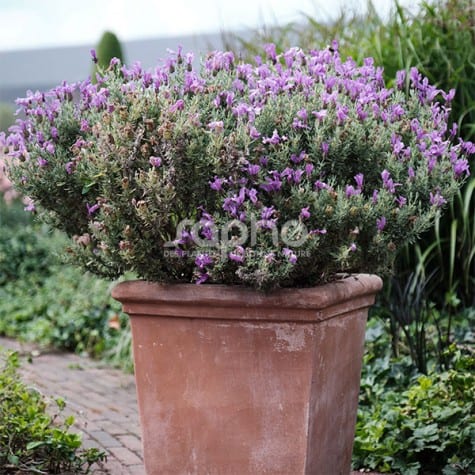
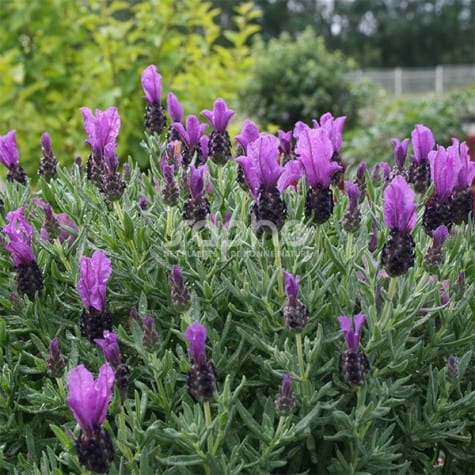
A pretty, fragrant purple cushion that never stops blooming!
MAGICAL® Posy Purple lavender is a very compact variety that forms a round cushion of flowers! In fact, its purplish-blue blooms are very abundant and remontant, offering pretty colors from late April to late September.
What's more, its fragrance attracts many insects!
It's a robust variety, selected for its resistance to humidity and heat.
Where to find Sapho plants ?
For young plants
You will find the names of Sapho-licensed nurserymen at the bottom of each variety sheet.
For available plants
Please ask your nursery suppliers.
Each licensed propagator is free to market his young plants to all his customers.
Categories
Menu
All our varieties
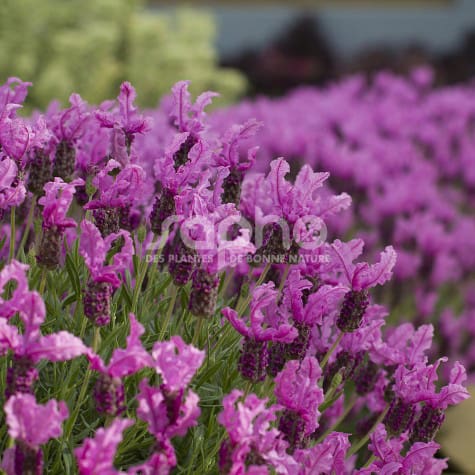
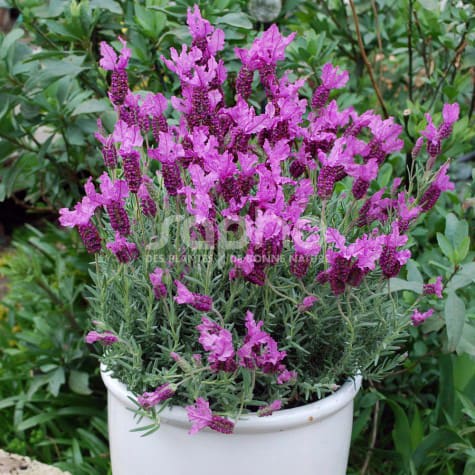
A real improvement among the French-LavendersTHE PRINCESS® Lavender, a real improvement in the French Lavender family is remarkable for the intensity of its bright pink flowering. Abundant, scented, it starts early in April-May, then continues during the summer with its numerous new flowers, facilitated by pruning.The aromatic evergreen foliage is grey-green.The tight and compact shape of this very attractive selection allows it to be used in beds of reduced dimensions, as a low hedge, planted 50 cm apart, or also grown in a large pot.Trophies: Plant of the year 2014 Nursery & Garden Industry australia awards : national winnerWinner Product innovation 2013 the Australian Business Awards
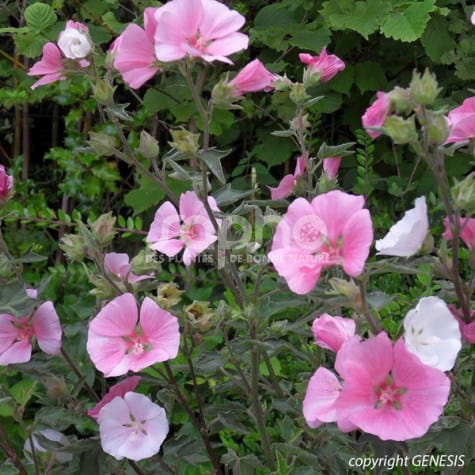
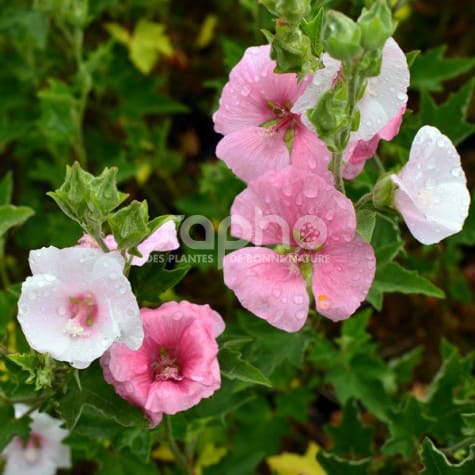
A superb summer bloom providing simultaneous tints from white to pink
Freely flowering throughout the summer months, this mallow is a delight in the garden. Over a period of 7 days, each flower is pure white when it emerges, gradually gathering shades of pink to finish a vibrant pink. Because its many flowers are always at different stages of development,'Song Bird' has the originality of resembling a bouquet composed from shades of these two colours. Its foliage is a clear bright green, fine-edged and somewhat elongated; its wood is thin and its habit compact, creating a well-balanced shrub. Developed in a selection program at the Hyfryd Nurseries in the heart of Wales, 'Song Bird' resists the cold better than the majority of mallows.
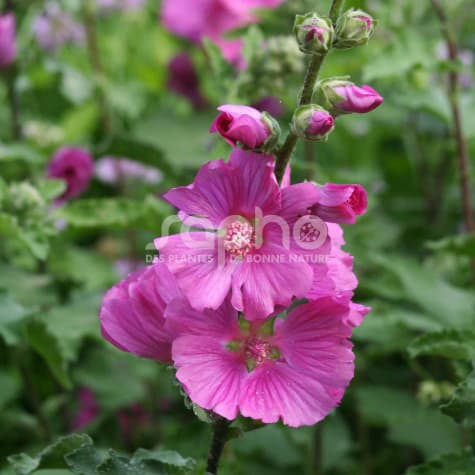
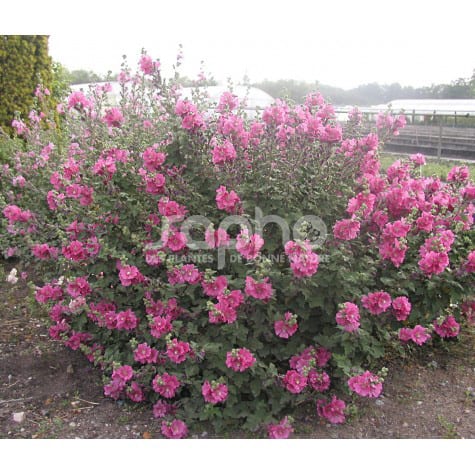
A bright lavatera for the beginning of summer.Deriving from the Lavatera olbia 'Rosea', CHAMALLOW® shows a certain orginality compared to the classic varieties of Lavatera. This selection has a particularly compact, bushy and rounded growth. Its light green, slightly velvety foliage stays healthy. These qualities make it interesting for growing in containers.In July - August, the straight branches have deep pink flowers. They are of medium size with even darker pink stripes.To be planted in flowering hedges or in beds, together with shrubs and perennials.
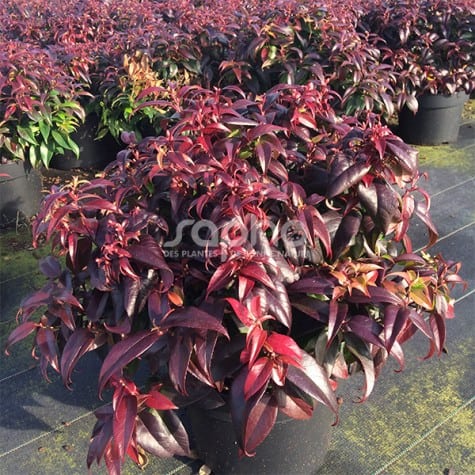
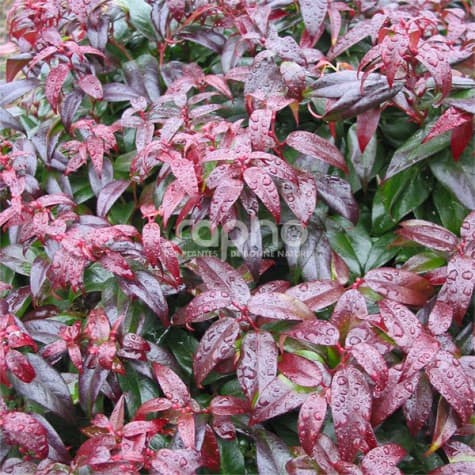
Showy foliage during winter !
This plant has evergreen foliage, with large, glossy leaves and changing colors: dark green in spring with bronze young shoots, turning dark reddish-brown in late summer, then increasingly burgundy as autumn and winter progress.
This variety has a compact, regular growth habit and is highly resistant to cold.
It looks great in pots, on a terrace or balcony, or in the ground.
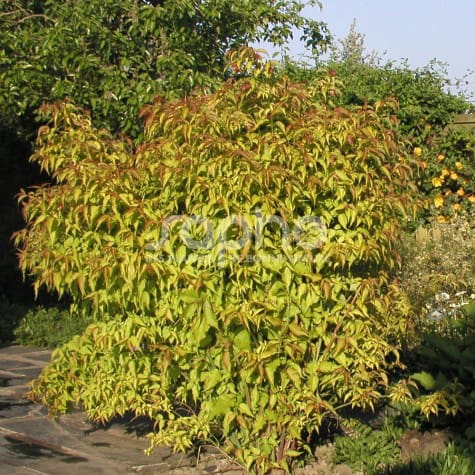

Golden pheasant berryThis vigorous variety of lysteria is of dense and very ramified growth, with fine and graceful wood. Its foliage is semi-evergreen in regions with mild winters and is particularly remarkable throughout spring and summer: the young shoots have a red tint, the foliage stays golden for a long time, turning light green in summer.In July- August, GOLDEN LANTERNS are covered in abundant clusters of flowers with light pink petals turning white with very decorative dark red sepals. They make place for numerous, very ornamental dark red fruits, with purplish black berries. They last long into the autumn and are appreciated by birds.This bright selection should be planted individually, in groups or in a mixed hedge.
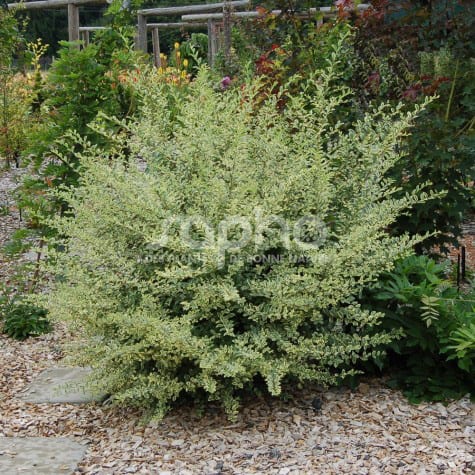
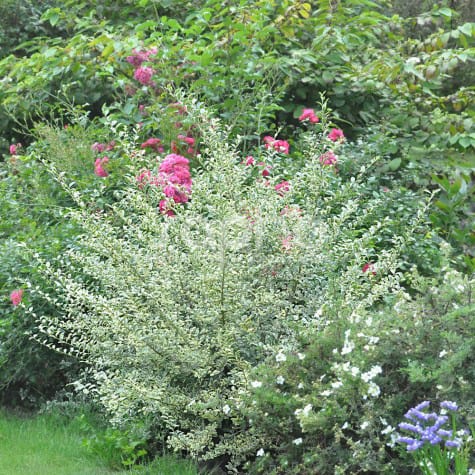
Luminous shrub, MUSLI® is noticeable from a distance.
MUSLI® was discovered and selected as a seedling of Ligustrum ibota in Switzerland.Leaves are opposite, evergreen to semi-evergreen and remarkable for their lasting variegation, highly resistant to the sun. The young shoots are light yellow, turning white with time. The foliage is more or less variegated, light grey-green with creamy white edges, sometimes so wide that they cover the entire width of the leaf.When young, the shrub is of bushy and spreading growth with arching branches. Then MUSLI® forms an even bush with a dense centre. It is of moderate growth.In early summer, the shrub will produce clusters of fragrant white tubular, nectar bearing flowers, turning into blue-black berries, which attract the birds.This shrub tolerates cutting back and is suitable in topiary, in a monospecific or a mixed hedge. Together with other shrubs or in a pot is is very remarkable by its particularoy bright foliage.
Trophies:
Bronze medal at PLANTARIUM 2011 (Boskoop - NETHERLANDS)
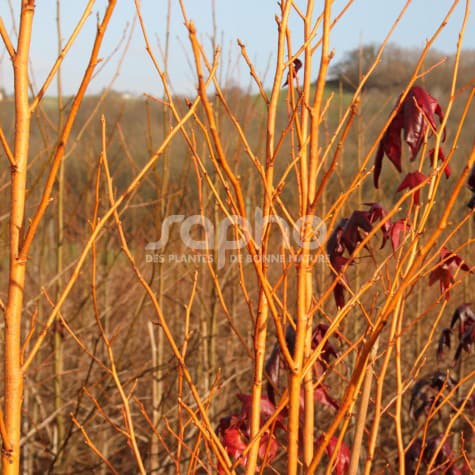
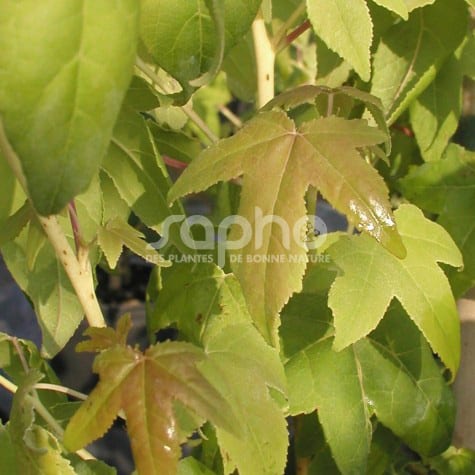
A Liquidambar, bright even in winter.
This tree, which is very original due to its yellow wood, contrasting with its red stalks, is decorative in winter.
Its deciduous foliage, pale yellow in the spring, then green in summer, changes to remarkable red tones in the autumn.
Due to the speed of its medium growth, 'Golden Sun' is a small tree, with an identical shape to the classic American sweet gum tree: even pyramid, with lateral branches growing regularly out of the trunk.
It is as suitable individually grown in smaller gardens, as in rows.
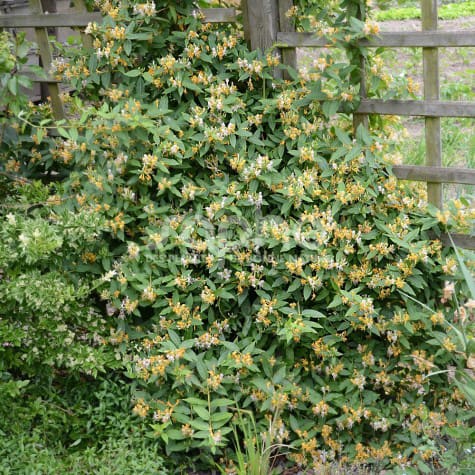
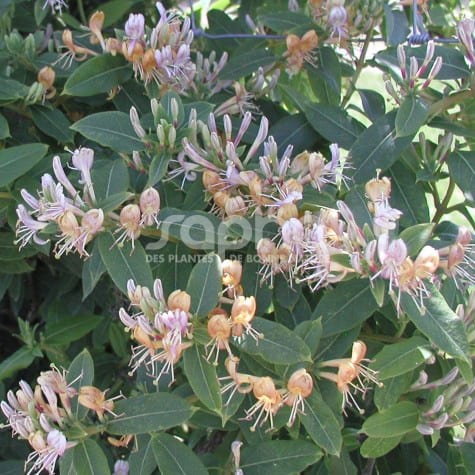
Ever, always: dense foliage even in winter, fragrant flowers in summer, bluish fuits in autumn.This variety of climbing honeysuckle of our CAPRILIA ® range is a hybrid between Lonicera henryi and Lonicera japonica 'Aureoreticulata'.CAPRILIA ® Ever is hardy and shows good persistence in winter.This selection shows a lesser development than its parent plant Lonicera henryi.The plant flowers well in May - June, presents clusters of small flowers which stand out well against the foliage. Light violet to pink as buds and in bloom, the flowers then turn yellow orange before wilting. They are fragrant, unkike Lonicera henryi. Some second flowering is noticeable in September.Dark blue fruits appear at the end of summer and persist for a long time.The narrow, mid-green foliage resists well to blackspot, mildew and aphids.To be trained.
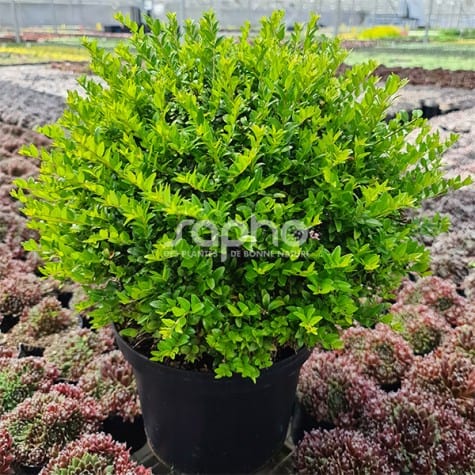
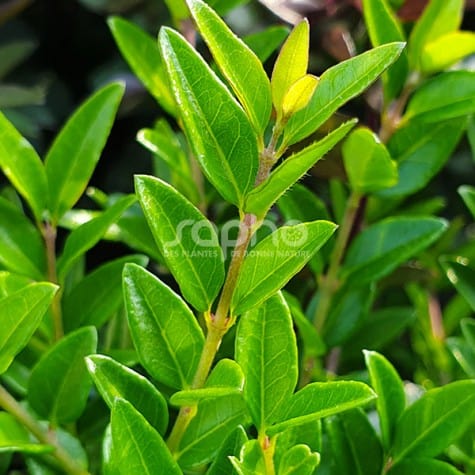
A shrubby honeysuckle with evergreen foliage
GARDEN CLOUDS® Green Breeze is a variety of shrubby honeysuckle more resistant to cold than the typical species (-18° C).
Its dense habit, fine, glossy, light-green leaves and ease of cultivation make it easy to prune and use in topiary.
It adapts to all soils (unlike Ilex crenata) and is faster-growing than boxwood, with no health problems.
Use in the ground, borders, low hedges or pots.
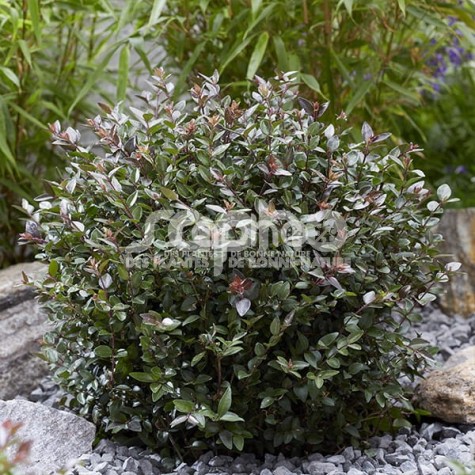
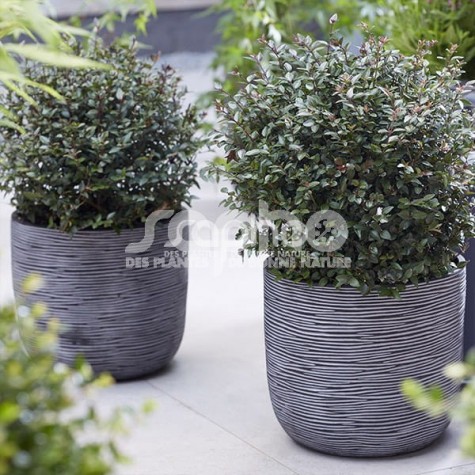
A shrubby evergreen honeysuckle with magnificent purple shoots
GARDEN CLOUDS® Purple Storm is a variety of shrubby honeysuckle more resistant to cold than the typical species (-18° C).
Its dense habit, fine, glossy, light-green leaves with dark purple shoots and ease of cultivation make it easy to prune and use in topiary.
It adapts to all soils (unlike Ilex crenata) and is faster-growing than boxwood, with no health problems.
Use in the ground, borders, low hedges or pots.
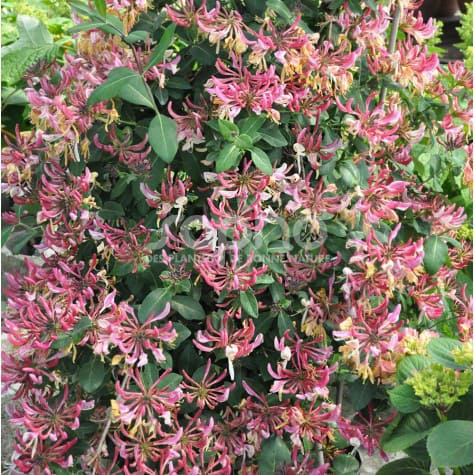
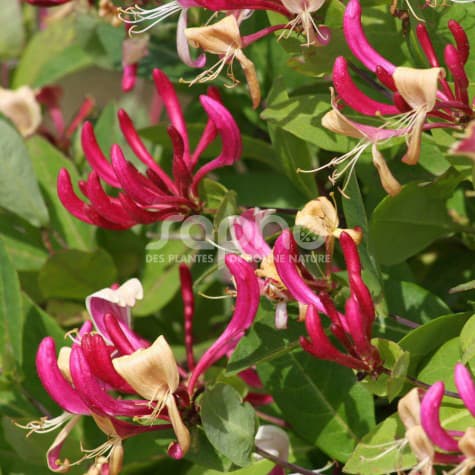
Imperial honeysuckle : an avalanche of beautiful red, fragrant flowers.
This selection of climbing honeysuckle of the CAPRILIA ® range derives from the Lonicera periclymenum 'Florida'. Its growth is medium.From mid June to July this flower bearing variety is particularly remarkable due to its big florets over the entire height of the plant. The fragrant flowers are carmine red in the bud stage, getting lighter on opening, turning cream, then yellow before wilting, producing a beautiful contrast.The dark green foliage shows off the flowers to their advantage. It is resistant to black spot, mildew and aphids.To be trained.