
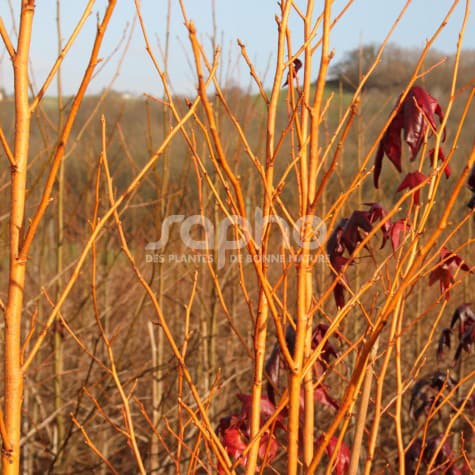
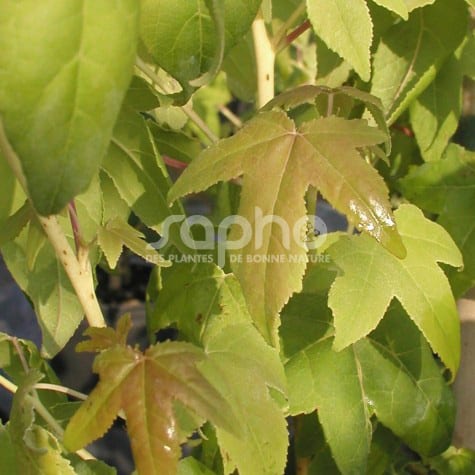
A Liquidambar, bright even in winter.
This tree, which is very original due to its yellow wood, contrasting with its red stalks, is decorative in winter.
Its deciduous foliage, pale yellow in the spring, then green in summer, changes to remarkable red tones in the autumn.
Due to the speed of its medium growth, 'Golden Sun' is a small tree, with an identical shape to the classic American sweet gum tree: even pyramid, with lateral branches growing regularly out of the trunk.
It is as suitable individually grown in smaller gardens, as in rows.
Filter By
Foliage
Where to find Sapho plants ?
For young plants
You will find the names of Sapho-licensed nurserymen at the bottom of each variety sheet.
For available plants
Please ask your nursery suppliers.
Each licensed propagator is free to market his young plants to all his customers.
Categories
Menu
Trees and shrubs
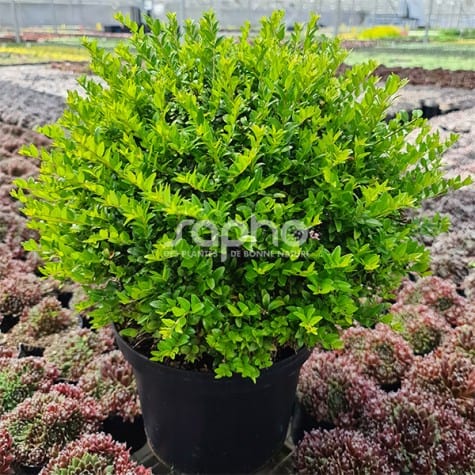
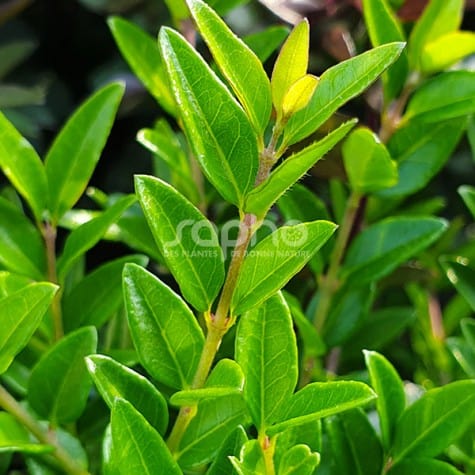
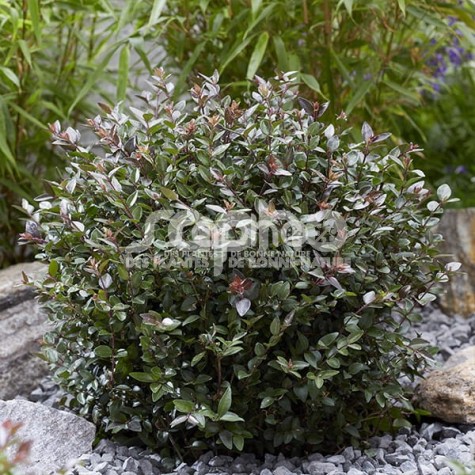
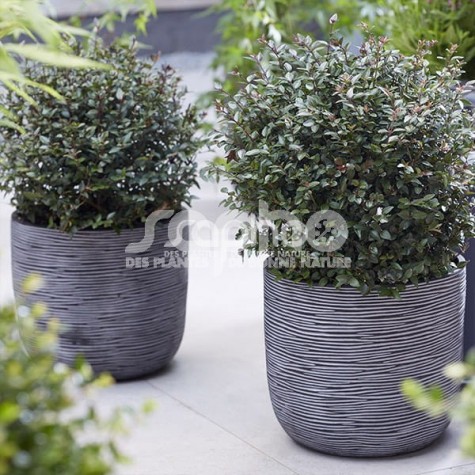
A shrubby honeysuckle with evergreen foliage
GARDEN CLOUDS® Green Breeze is a variety of shrubby honeysuckle more resistant to cold than the typical species (-18° C).
Its dense habit, fine, glossy, light-green leaves and ease of cultivation make it easy to prune and use in topiary.
It adapts to all soils (unlike Ilex crenata) and is faster-growing than boxwood, with no health problems.
Use in the ground, borders, low hedges or pots.
A shrubby evergreen honeysuckle with magnificent purple shoots
GARDEN CLOUDS® Purple Storm is a variety of shrubby honeysuckle more resistant to cold than the typical species (-18° C).
Its dense habit, fine, glossy, light-green leaves with dark purple shoots and ease of cultivation make it easy to prune and use in topiary.
It adapts to all soils (unlike Ilex crenata) and is faster-growing than boxwood, with no health problems.
Use in the ground, borders, low hedges or pots.
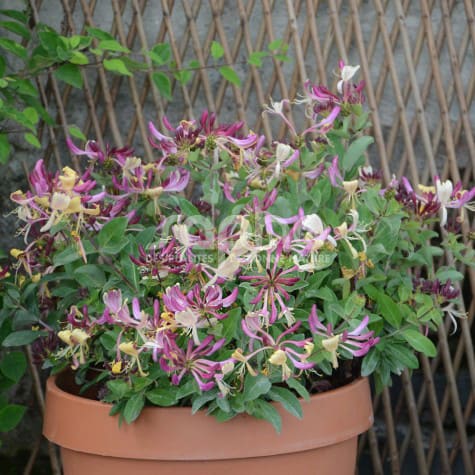
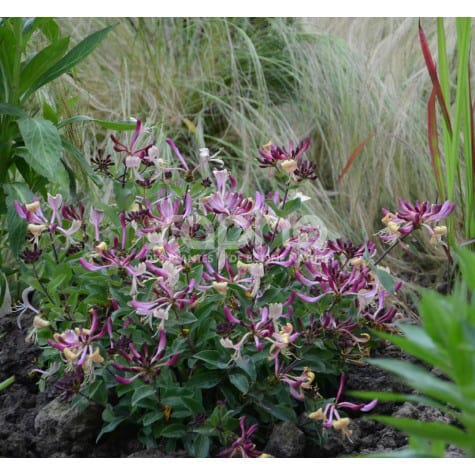
The CHIC of its perfumed flowers and the CHOC of its small silhouette!The "CHIC" : in June, the plant gets covered with very refined flower heads; the purple to deep pink tones of the buds are harmoniously emphasized by the pinkish white and then orangy yellow of the blossomed tubular flowers. This delicately scented cultivation is very floriferous and extends its flowering into September, in good conditions.The "CHOC" : this honeysuckle is surprising due to its dense and reduced growth.The opposite leaves with purple brown petioles have a greeny-blue colour. The shrub is semi-evergreen to evergreen, under temperate conditions.CHIC & CHOC® can be used in pots or planted in the garden.
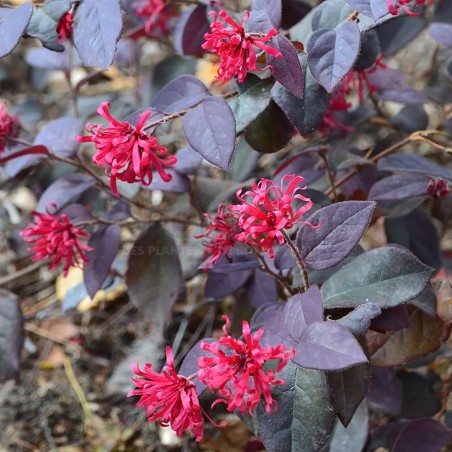
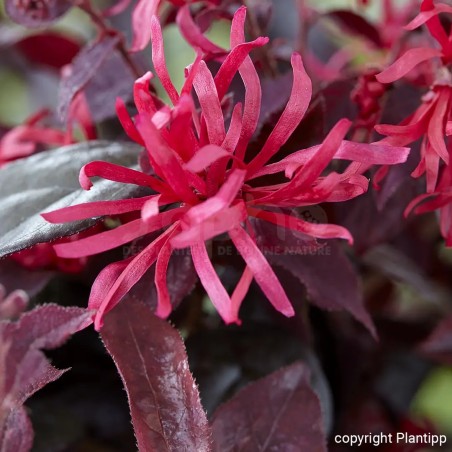
Remarkable bright red flowers and beautiful purple foliage all year long
This evergreen Loropetalum is noticeable for its foliage, which stays very deep purple all year long.Its habit is compact, upright and spread, the dimensions are moderate.EVER RED® is particularly spectacular during its flowering period, from the end of February to May, depending on the climate. The beautifully sized flowers are shaped as pompoms of fine straps, caracteristic for the Hamamelidaceae family Their full red colour is highlighted by the dark foliage.Loropetalum like half shade, they tolerate light sun. Once established they suffer draughts.EVER RED® can be planted alone or in numbers, in a distance of 1.00 - 1.20 m, and also in pots on a terrace or a balcony when regularly watered.
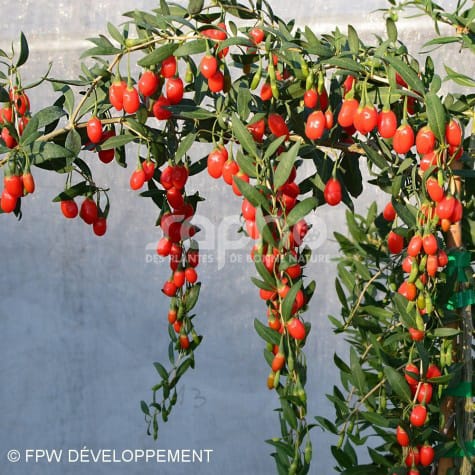
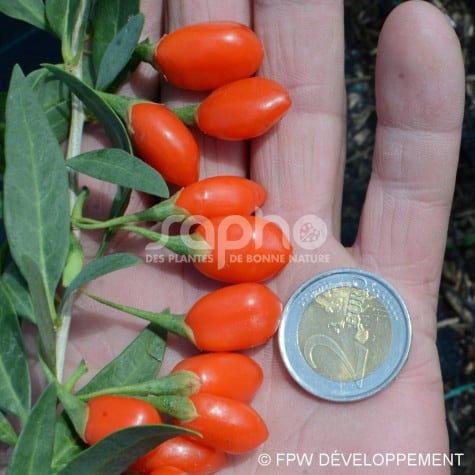
A real innovation from French genetics : An easy maintenance goji with sugary sweet berriesPRINCESS TAO® is an exclusively French genetic goji variety, the outcome of the breeding work by FPW DEVELOPPEMENT.The discrete light violet flowering starts at the end of May. It continues in successive waves right through into September, finally reaching the tips of its branches. The fruits form rapidly and simultaneously. When ripe, the berries are beautifully bright red and shiny. The picking from July onwards is easy as the berries are bigger than those of the currently available market varieties. The fruits are sweet, not astringent and can be eaten fresh or dried. Under good conditions the fruit production continues right into November.From the first year of planting, a small quantity of fruit can already be picked.The naturally layered growth makes staking necessary. Thanks to the sweet taste of its fresh berries and needing only little water, as well as being mildew resistant, PRINCESS TAO® links delicacy and easy maintenance.
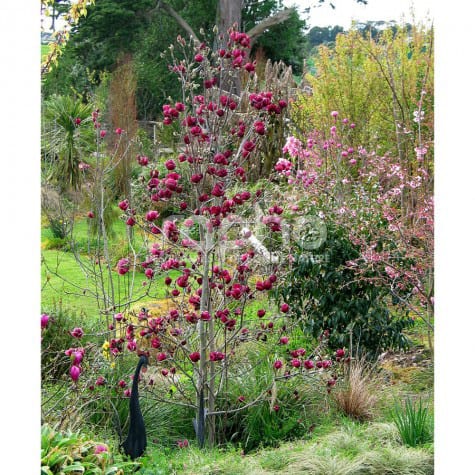
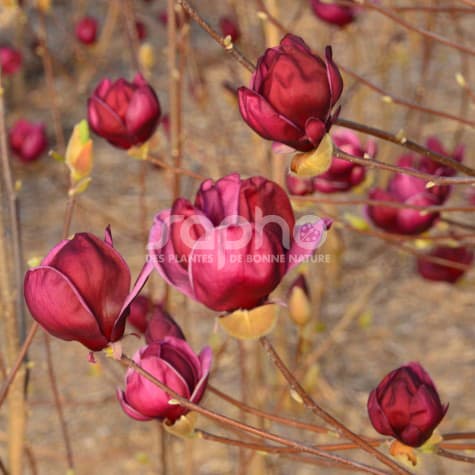
A compact magnolia, with beautiful bright purple tulips.
'Genie' a cross between M. soulangeana and M. lilliflora 'Nigra', has all the qualities of a good hybrid.Right from the beginning, it is very floriferous, and before the leaves appear, it has very big, stable, bright purple, tulip shaped flowers. They are lightly scented, long-lasting, and can resist temperatures of down to -3°C. In good conditions, a second flowering can bloom in summer.Dense and upright growth, good branching, moderate dimensions (at 10 years of age 3 m high and 1.50 m wide) : an asset, planted in small areas, grows as shrub or tree.
Trophies:


An imperial blooming from an early age
Selected by Vance Hooper, who is the breeder of the fabulous Magnolia ‘GENIE’
Superb flowers over 20 cm large, dark red-pink, lightly scented
Blooms from April with summer reblooming
Flowers abundantly, even on young plants
Moderate-sized tree, perfect for gardens or streets and squares
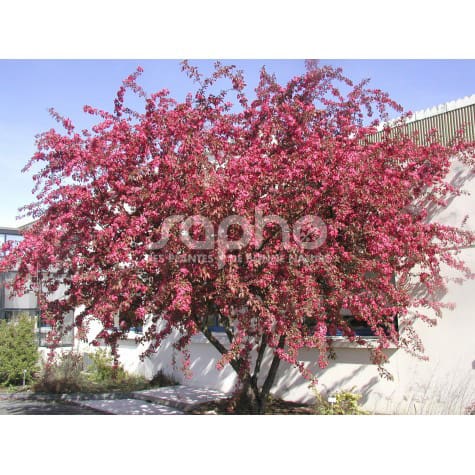
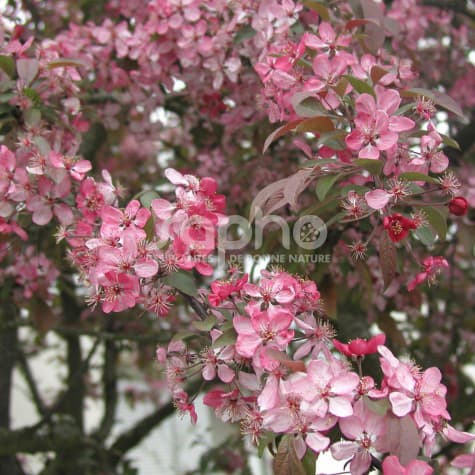
An ornamental apple tree for the town or the country.This tree is of semi-spreading shape, reaching a height of 3 to 4meters in ten years and has a harmonious form, which it keeps without the necessity of pruning. Its leaves and branches are purple.The violet-pink flowers blossom in April - May along the whole length of the branches, and the purple fruits appear in autumn.COCCINELLA® has also been chosen by the INRAE selectors for its resistance to the major diseases such as fire blight, scab and mildew.Grown to a full standard, COCCINELLA® has the asset of a small town tree; grown in clumps, its foliage and fruit are appreciated in mixed countryside hedges or in shrub borders.
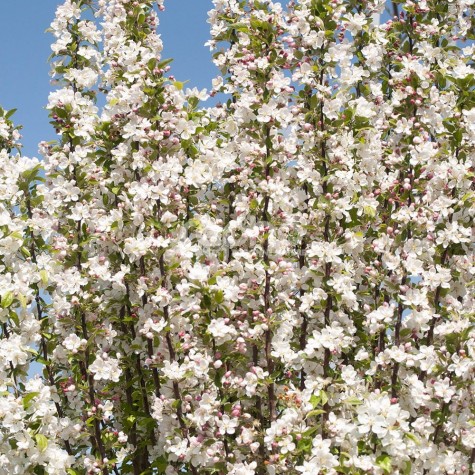
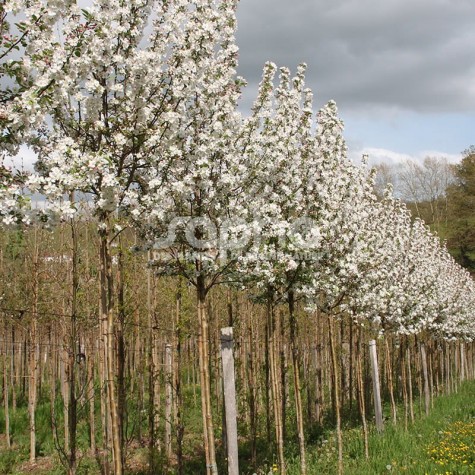
Naturally a STAR since its creation.
This tree is of semi-spreading growth, reaching a height of 3 to 4m in ten years and has a harmonious shape, which it keeps without the necessity of pruning. Its foliage is green.
In April, 'Evereste' covers itself in bright pink flower buds, which bloom as pure white bouquets of flowers. The quality and the abundance of its pollen make it an ideal pollinator, precious for fruit growers (in proportion of 6 - 8% of all varieties of early or semi-early flowering).
The cherry sized fruits are orange with thin red stripes. They apprear in autumn and have the particularity to last well into winter.
'Evereste' has also been chosen by the INRAE selectors for its resistance to the major diseases such as fire blight, scab and mildew.
Nearly a million plants have been sold in Europe since its creation in 1974.
Its ornamental qualities, its reasonable dimensions and its easy care make it an excellent small urban tree if grown full standard; in clumps it is very valuable in the composition of flowering hedges and in shrub borders.
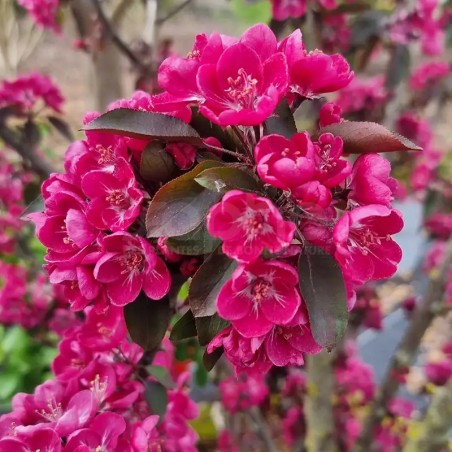
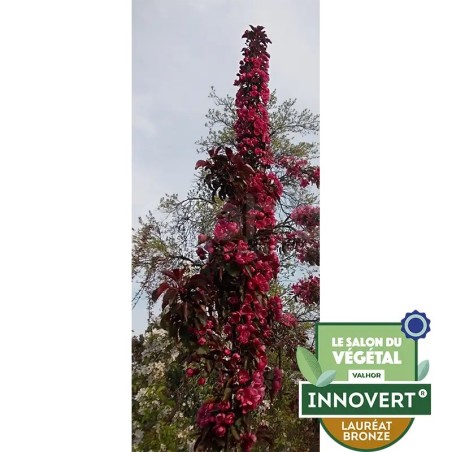
A landmark in the garden!
A columnar habit when young, evolving into a pyramidal form
Young, purple foliage that turns dark green
Spectacular intense red flowering in bud, evolving to carmine pink
Numerous plum-sized, purplish-red fruits with red flesh persist until late autumn
Its initial columnar shape evolves into a pyramid shape with age, making it ideal for small spaces
Award:
INNOVERT 2026– Bronze winner – Salon du Végétal 2026
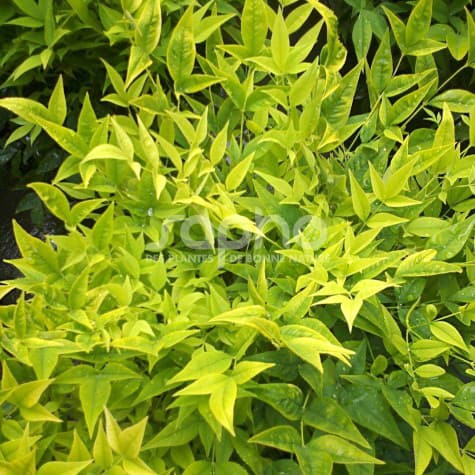
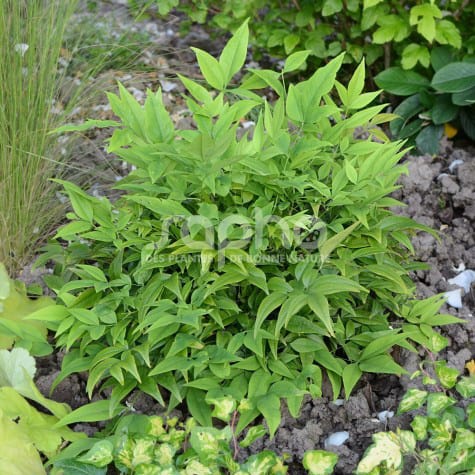
In springtime its chartreuse coloured leaves are very attractiveA Nandina with a brand-new colour! The new shoots are yellow-green, chartreuse or also lime green and very bright. In full sun the outer leaves keep their chartreuse colour, whereas the inner leaves turn light green.Its shape is very interesting, forming a bushy and branched little shrub of under 1 m, like a ball.It never flowers, or very seldom.Recommended to illuminate the darker parts of the garden in the spring, it also accepts to be grown in pots.Trophies: Gold medal at PLANTARIUM 2014 (Boskoop - NETHERLANDS)Honored with a Retailer's Choice Award™ at SNA 2014