
The ideal clematis for urban gardens
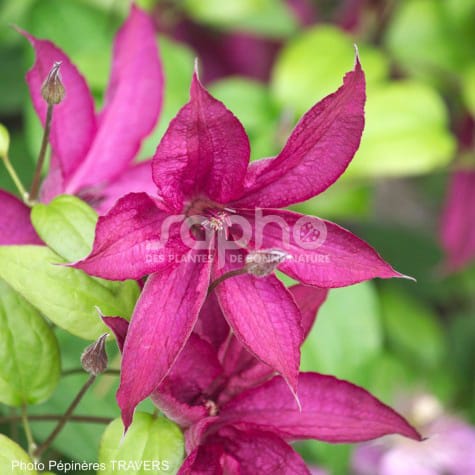
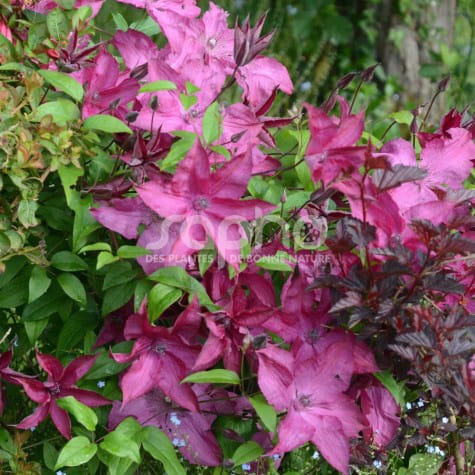
SAPHYRA® Nancy is a new Clematis variety, ideal for terraces, balconies and small urban gardens. With its compact habit, not exceeding 1.5 to 2 m, it can be grown as a climbing plant or as a ground cover. Extremely flowering, it offers an airy and colourfull display that is repeated throughout the summer. Its abundant, fuchsia-pink, star-shaped 10-12 cm flowers, shine bright against the foliage. Resistant to pollution, cold, rain, drought and diseases, it is an easy-to-grow, low maintenance plant. The SAPHYRA® Nancy Clematis behaves like a perennial and regrows from base every year. Pruning is not obligatory.
A clematis named after the city of Nancy:
The city of Nancy is the birthplace of Victor Lemoine, regarded worldwide as the greatest ornamental plant breeder and introducer of all times. The naming of this clematis variety is a fitting tribute to the role played by the city of Nancy in the development of horticulture.
Where to find Sapho plants ?
For young plants
You will find the names of Sapho-licensed nurserymen at the bottom of each variety sheet.
For available plants
Please ask your nursery suppliers.
Each licensed propagator is free to market his young plants to all his customers.
Categories
Menu
All our varieties
All the qualities of SAPHYRA® clematis, with the added bonus of purple!
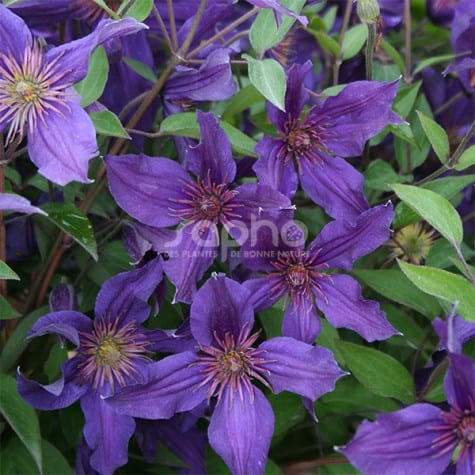
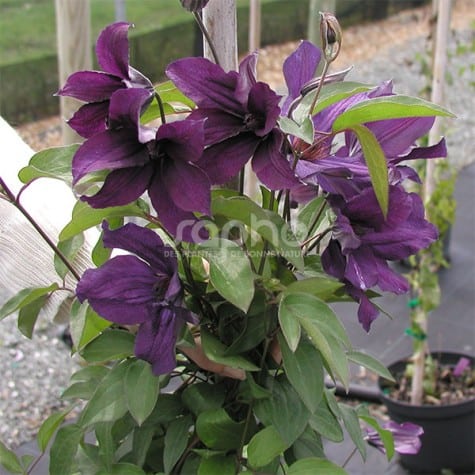
Clematis SAPHYRA® Violetta has violet flowers, which are darker than those of SAPHYRA® Indigo.
It is also highly branched and stocky, and grows upright.
Like all SAPHYRA®, it's easy to garden, highly resistant to disease, dryness and excess water, and doesn't need pruning as it restarts from the base every year.
It can be used as ground cover, as a border plant or in combination with a support plant.
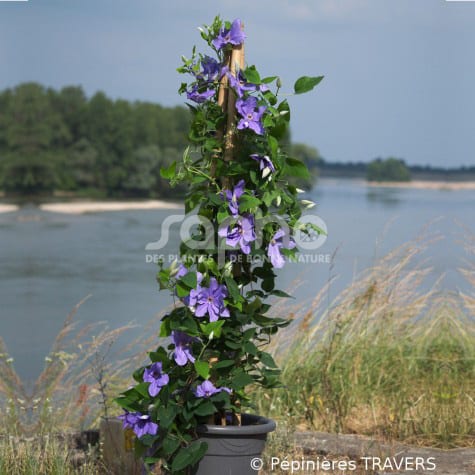
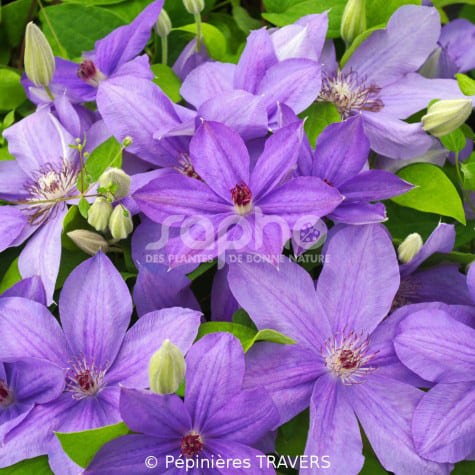
In the SUCCESS® range, a blue, very floriferous Clematis
This selection is particularly representative for the SUCCESS® range. Since its flowering starts from the bottom and goes to the top, it is well adapted to be sold as 'flowering pot plants'. In the garden it differs from other varieties of traditional Clematis that have less flowers at their base. The flowers of 12 - 16 cm in diameter of SUCCESS® Bleu de Loire develop from the end of April until June. The fine purple blue tepals form a beautiful contrast to the bordeaux-red stamens in the heart. There is a second flowering from August to October. Its habit is very compact and of moderate height (under 2.00 m). Therefore Bleu de Loire can also be used in tubs to decorate the terrace or a balcony.
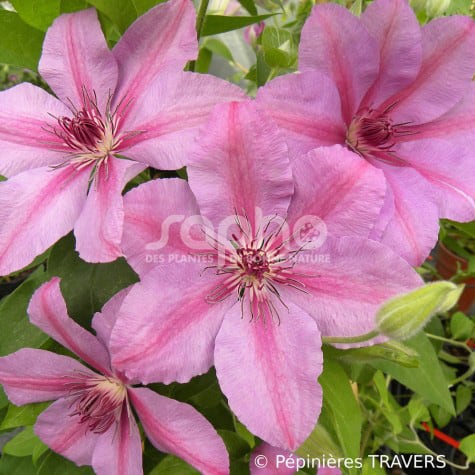
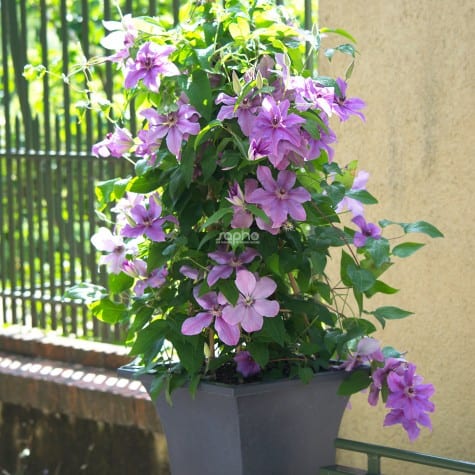
Sweet pink Clematis with very compact shape. Abondant second flowering
The sweet pink flowers of SUCCESS ® Candy appear in April - May - June and renew themselves abundantly until September - October. The shape of this selection is particularly dense.
Trophies:
Bronze medal at Plantarium 2013 (Boskoop - NETHERLANDS)
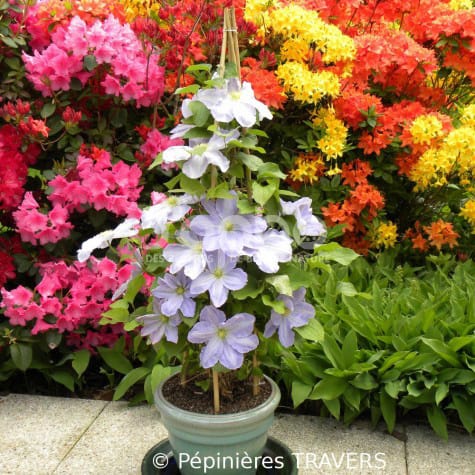
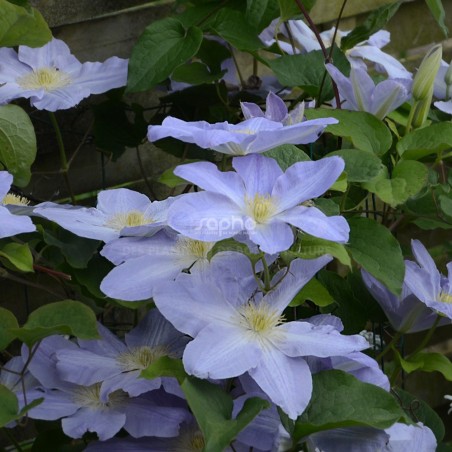
Spectacular flowering, lavender blue from top to bottom, during the spring and summer months.
This variety is exceptional for its ability to flower from top to bottom and for its abundant perpetual flowering. The slightly wavy and interlinked tepals are lavender blue with a wide light blue, almost white, centre line. The 12 to 18 cm wide flowers bloom from April to September - October. The shape is very compact, the height reaches 1.50 m to 2.00 m.
Trophies:
INNOVERT ® bronze medal 2013 Nursery Category (ANGERS - France).
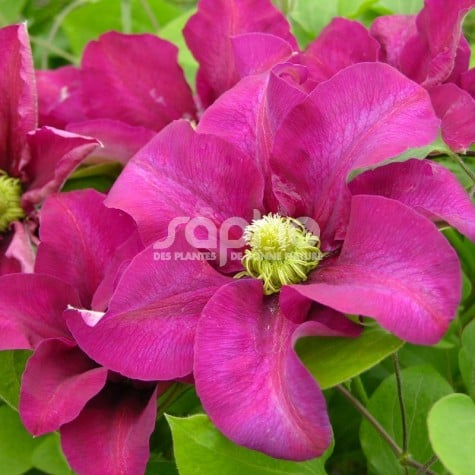
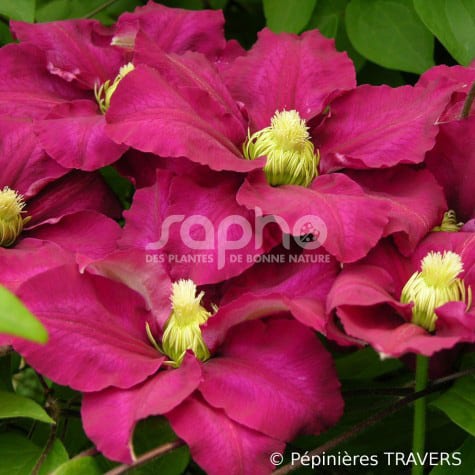
An original contrast : the heart and its volcano of yellow stamen on intensely red tepals
In May-June and again in September, SUCCESS ® Magenta offers an original flowering: a beautiful contrast between the intense red of the tepals, the lemon yellow of the heart and its vulcano of stamen.
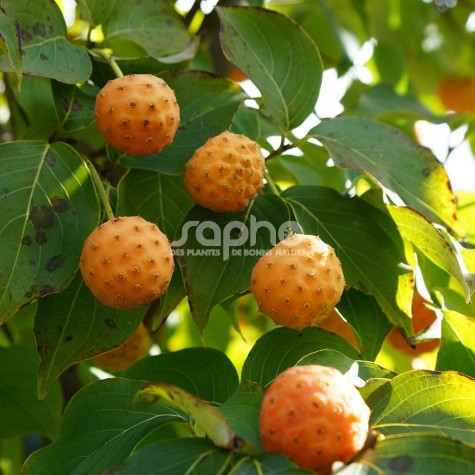
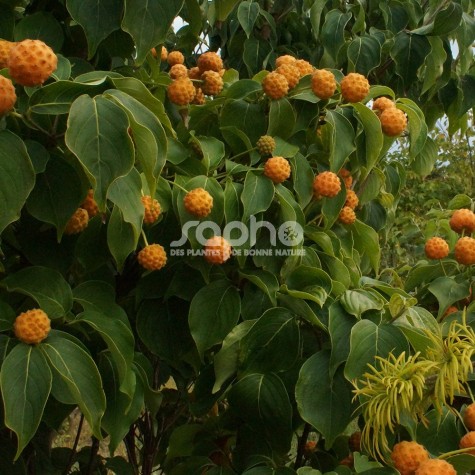
The elegance of Cornus is enhanced by the originality of its fruit
This variety blooms abundantly with white flowers from late May to early June.
Its decorative fruits, visible from afar, have original colors: yellow evolving into pumpkin-orange when ripe.
Its foliage also changes from green to orange-yellow in autumn.
This large shrub is easy to grow and has a flared habit when young.
Ideal as an isolated plant in the garden.
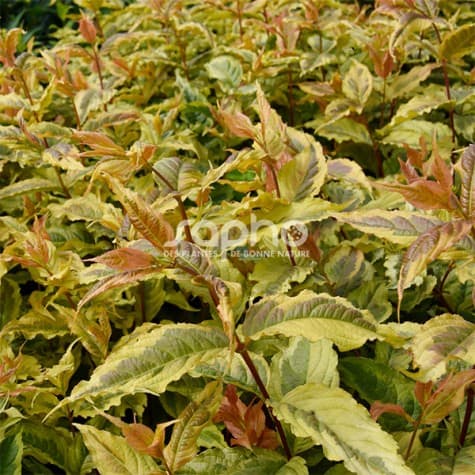

Brilliant foliage, even in full sun !
This sun-hardy shrub with its variegated tricolored foliage adds a bright touch! Its silvery-green and yellow foliage, with young orange shoots, also takes on beautiful autumn colors, with stronger tricolors in September-October.
Its flowers appear in spring and are highly melliferous.
Easy to grow, it has dense growth and a compact, bushy structure. What's more, it's low-maintenance and very hardy, resistant to dryness and disease.
It is ideal for patio terraces, as a border plant or as a mass landscape planting.
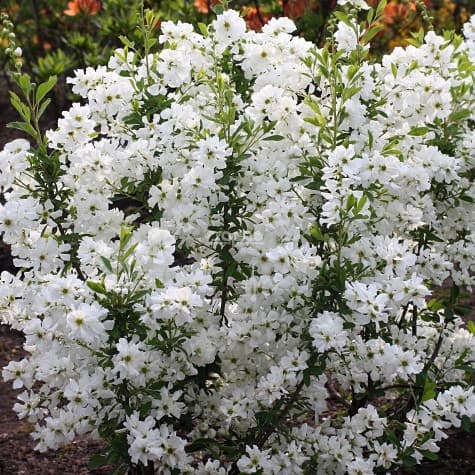
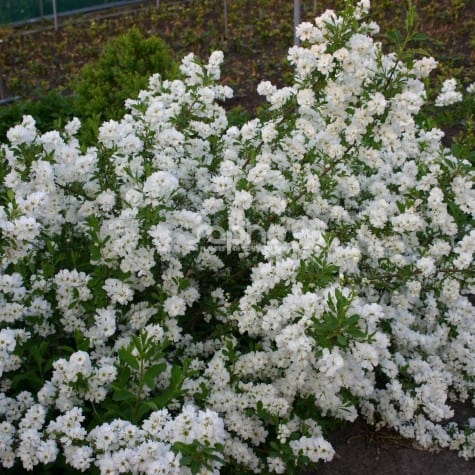
A springtime asset for smaller spaces.
'Niagara', a hybrid cultivation of Exochorda racemosa and macrantha 'The Bride', is denser than The Bride, well branched, with a more shrub-like shape, less arched.It is also more floriferous and offers numerous clusters of small white flowers in April - May.Very hardy. Once it is well settled, it tolerates drought.'Niagara' is well suited for smaller areas and can be grown in a pot.
Trophies:
Best new variety prize at Plantion 2011 (EDE)SILVER medal awarded by Trials Committee of RHBS (Boskoop - Netherlands)
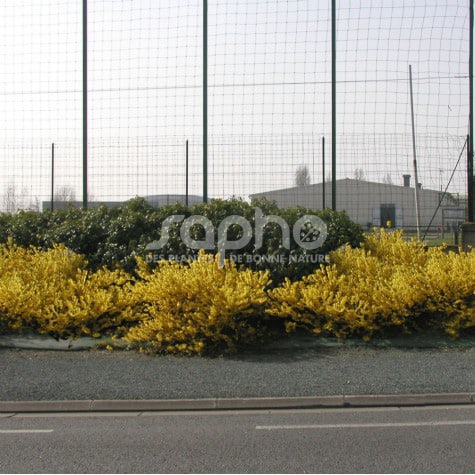
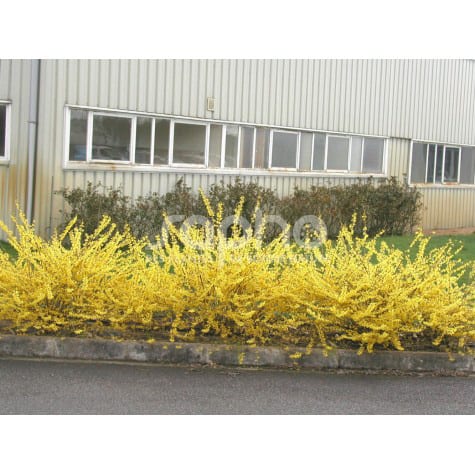
The first ground-cover Forsythia is still a STAR !
MAREE D'OR ®, about 0.80 m high and 1.50 m wide, layers naturally and as such has all the qualities of a good ground cover.Its grapefruit yellow, abundant flowers are early, in February - March, depending on the regions and climate. It flowers on the previous year's stems.The light green foliage comes after the flowers and completely covers the stems.Because of its principal function as a ground cover, MAREE D'OR ® can be used grouped on banks, guide islands, roundabouts and their green areas, using 1 plant per square meter. It can stand being planted on slabs, in containers and flower boxes.
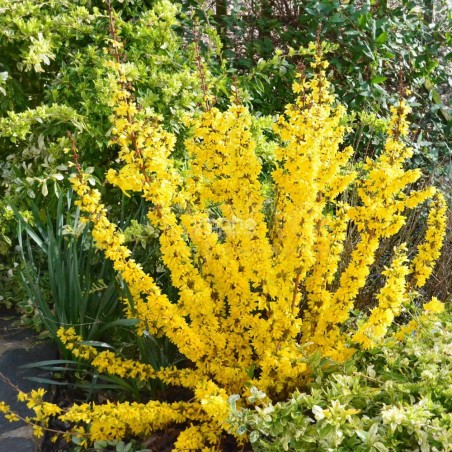
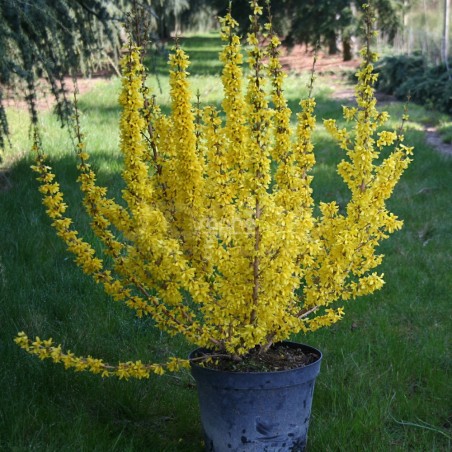
A treasure for gardens and nurseries.
Its particularly dense and compact growth gives it a harmoniously branched and rounded profile, without having to be pruned.
This cultivation is remarkable in March - April because of its abundant flowering and its branches covered with bright yellow-orange flowers.
Then follow beautiful, shiny dark green, lance-shaped leaves.
For the producer, MIKADOR® is the assurance of a homogeneous production and minimum loss in cultivation.
MIKADOR® can be planted in pots or in the ground; in early spring it brings a touch of sunshine to gardens, terraces or balconies.
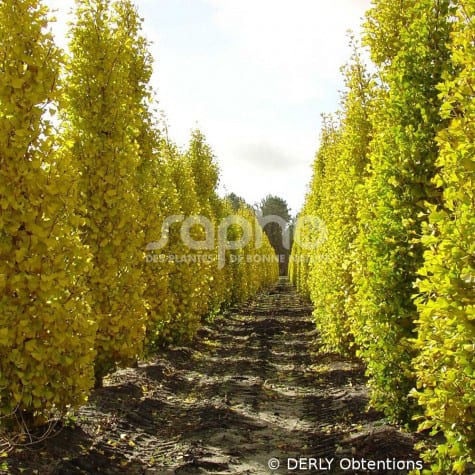
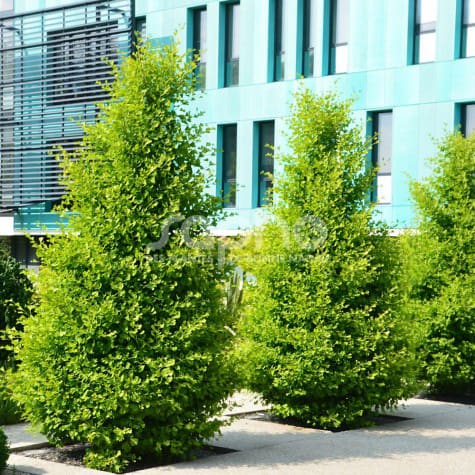
The pyramide shaped maidenhair tree.
Its moderate dimensions and its pyramide shaped even growth allows this beautiful Ginkgo selection to be used in gardens, planted in rows and grown in large containers.'Blagon' is spectacular in the autumn due to its golden yellow colour. For 30 years, the original stock plant has still not told the secret of its «flowers», meaning we still don't know if it is a male of female tree.It is rustic, resistant and adapts well to urban conditions.