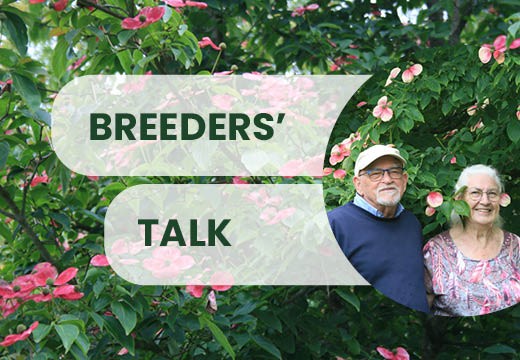
Testimony of Alexis and Liliane Le Duigou, passionate amateur gardeners - Les Jardins de Treuscoat
Testimony of Anne Seznec, head of plant purchases for the city of Biarritz
Once a variety has been selected and protected, a second phase begins in its development. How is it disseminated,...
When you create a new variety, protecting it is a very important step, allowing you to have rights over your...
Testimony of Claire Alix Barrault, director of Barrault Horticulture
The creation of a new variety begins with the selection of a first original plant. Resulting from sowing or mutation, the fruit of chance or long research, this plant possesses original characteristics that provide a remarkable new attraction, a new use, etc.
A breeder is the person or organisation that creates a new variety.
At Sapho, we work directly with over fifty different breeders and distribute varieties from over a hundred other breeders in different countries.
Intuitively, plant breeding is associated with the idea of a research institute. It is true that INRAE was historically the first breeder and remains a partner of Sapho today. Universities and experimental stations are also part of the Sapho network.
But in reality, plant breeders have much more varied profiles. They all have one thing in common: they are always men and women, curious and observant, with a passion for plants! Some are passionate about a particular genus or group of plants: agapanthus, hydrangea... others are curious about a wide variety.
As growers, they know plants and observe them on a daily basis. They are curious about diversity. Some of them often have their own specialities and develop collections outside their day-to-day work.
Some have gardens of just a few hundred square metres, others have outstanding listed gardens or botanical parks of several hectares.
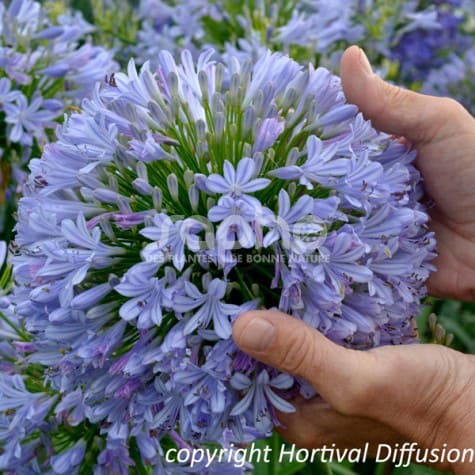
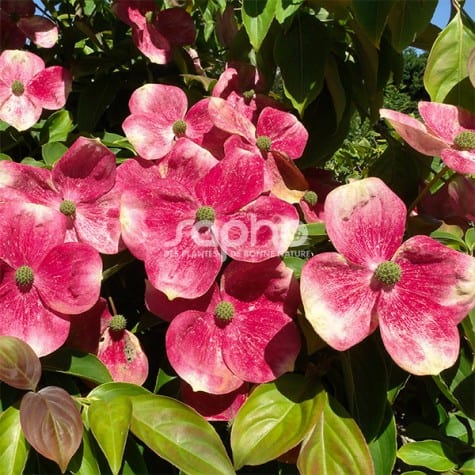
Many amateur enthusiasts enjoy collecting seeds and sowing them, or observing natural seedlings in their park or garden. Among the diversity of young plants, we sometimes find ‘little pearls’. For example, BLUE INFINITY® “Panaga” agapanthus, with its extraordinary balls of flowers, comes from a Nelly Panaget seedling. Cornus x “Soleil Rouge”, spectacular for the size, abundance and changing colour of its flowers, was spotted by Alexis and Liliane Le Duigou in their gardens at Treuscoat.
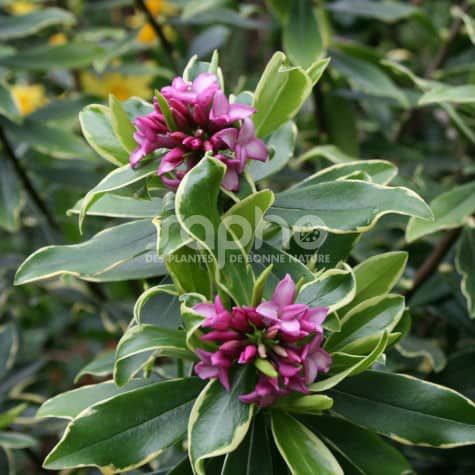
The discovery may also be the result of a chance natural mutation, i.e. a genetic change that occurs occasionally, accidentally. In some cases, this mutation brings added value: variegated or golden foliage, flower shape, colour, shape, plant habit. A mutation of the “Aureomarginata” variety, Daphne odora “Rogalski” has a more compact, branched form that makes it particularly suited to small gardens.
Other varietal innovations come from selection programmes built around clearly defined objectives: resistance to a disease, range diversification, etc. These programmes sometimes take decades to produce selections that meet the desired criteria. This is the case with elm varieties resistant to Dutch elm disease, the result of more than 30 years of INRA research and experimentation.
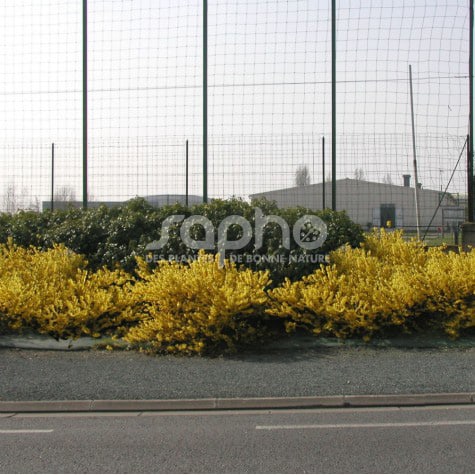
Serendipity is the act of making a chance discovery while researching another object. This sometimes happens in plants. For example, as part of an INRA research programme to produce upright Forsythia for small gardens, a Forsythia with a very low growth habit and natural marcotting appeared in the selection batches. The result is Forsythia Marée d'Or® “Courtasol”, the first ground-covering Forsythia!
Sapho and INRAE: a partnership to improve plant health
Carefully observed, meticulously selected
From selection to fame
Why and how is a new variety protected?
check_circle
check_circle